OMA Chapter 9: Maintenance
by adminAt first, Gu Qingyun was rather slow at memorizing.
Gu Boshan would only teach him how to pronounce the characters during class. As for their meanings, he would explain them only after Gu Qingyun could recite the text.
Later, Gu Qingyun realized that this method wouldn’t work for him.
The complicated traditional characters made his head spin, and many of them felt unfamiliar. Moreover, just four characters could contain an entire sentence’s worth of meaning. Unlike modern Chinese, which was at least written in vernacular language, these classical texts were much harder to understand.
It would be much easier to memorize them after understanding their meaning.
So he came up with a solution.
He used the charcoal pencil his father had made for him to convert the traditional characters into simplified Chinese characters, then wrote them down one by one on a smooth stone slab.
That way, the familiar simplified characters were firmly imprinted in his mind. Whenever he saw them, he immediately felt a sense of familiarity.
After all, he had attended a top university in his previous life and had a fairly good command of Chinese. He could look at the simplified characters and try to figure out the meaning of the original text himself.
Whether his interpretation was completely accurate was another matter. As long as it helped him memorize the text, that was enough.
More than a decade of studying in his previous life had not been wasted. Gu Qingyun had developed his own methods for memorization.
After putting those methods into practice, his memorization speed soon improved dramatically, much to Gu Boshan’s surprise.
Once he had solved the problem of memorization, Gu Qingyun began switching back and forth between simplified and traditional characters. He made sure that when he eventually had to write, he could reproduce the correct traditional characters without missing a single stroke.
Time always flew when Gu Qingyun was absorbed in his studies.
In the blink of an eye, six years had passed.
He was now ten years old.
At ten, he had grown much taller. Six years earlier, he had been noticeably shorter than other children his age. Now, he had caught up with them, and his health had improved considerably as well.
For Gu Qingyun, who aspired to take the imperial examinations, good health was essential.
Many scholars, even those who had only passed the county-level examinations, became seriously ill after catching the slightest chill. The pressure of the examinations, combined with their own anxiety, could make things even worse. Some were lucky enough to recover after a few months, while others never recovered at all.
A well-known example was Jia Zhu from Dream of the Red Chamber. Even with the Jia family’s excellent resources, he still failed the examinations and died young.
If someone from such a wealthy family could not withstand the strain, then a poor scholar like Gu Qingyun would have an even harder time.
Studying was extremely demanding. Without access to proper medicine or treatment, he had to learn how to take care of his health himself.
This was especially important because he had been born prematurely.
He did not expect to live to a hundred. He would be satisfied if he could live to sixty.
For him, simply being alive was already a blessing.
Fortunately, health maintenance was not unfamiliar to him, thanks to his memories from his previous life.
He had been very close to his grandmother.
After graduating from university and returning to his hometown for work, he was able to go home and live with her every day. As he spent more time with her, he suddenly realized just how old she had become.
Afraid that he might lose her, Gu Qingyun began reading books about health maintenance for the elderly and frequently searched for related information online.
As a result, he had accumulated some knowledge about maintaining good health.
Now, that knowledge had become one of his trump cards for making a living in this era.
Health maintenance was not something only middle-aged or elderly people needed to worry about. If one started taking care of their health from a young age, they could naturally enjoy a healthier life.
Every morning after waking up, Gu Qingyun drank a cup of warm water.
It quickly eased the discomfort of waking up and helped clear his mind. He always drank it slowly, one sip at a time, believing that this was gentler on the spleen and stomach.
He never drank a large amount all at once. He believed doing so would burden the spleen and cause bloating.
After getting out of bed, he first walked around the courtyard to stretch his body. Then he practiced Tai Chi a few times.
His movements did not have to be perfect. The important thing was to get his body moving and warm up his muscles before breakfast.
After eating, he would slowly walk to Gu Boshan’s house for his morning studies, usually spending about an hour there depending on Gu Boshan’s schedule.
Some families in the village ate only two meals a day.
For the Gu family, however, eating three meals a day was normal. They had once been minor landlords, so three meals had become a long-standing habit.
If necessary, they could reduce their meals to two a day, but since Gu Qingyun’s health had improved, the family’s circumstances had also gradually gotten better.
With the relatively high yields of potatoes, corn, and sweet potatoes, along with various vegetables and fruits, they could at least keep everyone fed.
After lunch, Gu Qingyun would stand for about fifteen minutes. He would then walk around the room for another fifteen minutes before taking a nap.
His afternoon nap usually lasted between fifteen minutes and half an hour.
After waking up, he would continue studying.
When he turned six, he also began practicing calligraphy.
Since the imperial examinations required neat handwriting, students generally practiced small regular script, paying attention to even strokes, smooth ink flow, and proper character formation.
Gu Qingyun was no exception.
At this time of day, he usually read or practiced calligraphy in his room.
Just as he had done in modern times, he would stand up and stretch every forty-five minutes or so.
During these breaks, he would clean the chicken coop or help his grandmother and mother with household chores.
This was undoubtedly one of the best ways to build goodwill with his family.
Of course, sometimes he would also hold his little cousin.
Yes, he had a little cousin now.
Three years earlier, when Gu Qingyun was seven, his second aunt, Li, had finally given birth to a son.
They named him Gou Dan—literally, “Dog Egg.”
A year later, she gave birth to another son. He had just turned one, and his nickname was Gou Sheng—”Dog Leftover.”
Gu Qingyun suddenly had two younger male cousins.
He felt deeply sympathetic toward their unfortunate names and couldn’t help thinking that his own nickname, Shuanzi, was actually quite pleasant.
The Gu family, however, was genuinely frightened of losing another child. The humbler and more ordinary the name, the safer they felt.
After giving birth to her first son, Gu Qingyun noticed a significant change in Li’s temperament.
Before having a son, she had always been quiet and reserved, and she had mostly deferred to Xiao Chen.
But after having two sons, her spirits improved considerably. She became much more involved in family affairs and developed a stronger sense of belonging and ownership.
She no longer seemed as detached from the family as she had before.
Gu Qingyun was not worried about this.
After all, he had parents who were practically divine allies.
Perhaps to prevent the second branch of the family from developing any resentment toward his studies, Gu Dahe and Xiao Chen often talked at home about how Gu Qingyun would repay his grandparents, second uncle, and second aunt once he succeeded in his studies.
They also frequently mentioned Gu Boshan’s praise of him.
Old Chen was especially pleased by this.
She never held back when praising her beloved grandson. She could praise him from head to toe without missing a single hair.
Of course, she kept those praises within the family.
She was shrewd enough not to boast about Gu Qingyun throughout the village. Otherwise, she might attract unnecessary attention and put the entire family under scrutiny.
Gu Qingyun himself also knew how to conduct himself.
He never walked around with a blank or arrogant expression. Instead, he greeted everyone with a smile.
He was fair-skinned and good-looking, had a sweet tongue, and possessed the quiet refinement that came from years of studying.
All of this made him very easy to like.
As time passed, it seemed that everyone had been subtly influenced.
The entire family gradually developed an expectant and supportive attitude toward Gu Qingyun’s studies.
If Gu Qingyun had not remained clear-headed and understood the deeper intentions behind his parents’ actions, he might truly have believed that he was exceptionally clever and that studying and passing the imperial examinations would be easy.
Therefore, even after gaining two younger cousins, Gu Qingyun’s position in the family did not change.
He remained firmly at the top of Gu Jishan and Old Chen’s hearts.
After dinner, he would take a walk around the courtyard to help digest his food.
Before bathing, he would do push-ups until he felt tired.
After taking a bath, he would not immediately go to sleep.
Instead, he would begin memorizing.
First, he reviewed everything he had learned that day. He would not immediately look at anything he could not remember. Then he started from the Three Character Classic and worked his way forward until he reached the new material he had learned that day.
At this point, he could light an oil lamp and read through anything he had forgotten.
Afterward, he would extinguish the lamp and comb his hair.
He paid particular attention to this in winter. He had read that the head contained many blood vessels and that combing the hair could promote circulation, relieve fatigue, and improve one’s overall condition.
Finally, he would lie in bed and silently go over whatever he had forgotten.
If he still could not remember something, he would not get back up to check.
He would simply wait until the next morning.
This method might seem clumsy to people with excellent memories, but Gu Qingyun had no other choice.
He was not a genius.
If he wanted to become someone outstanding, how could he avoid putting in some extra effort?
For Gu Qingyun, maintaining his health was also about avoiding anger.
He often wore a smile, which improved his relationships with others and reduced unnecessary conflicts.
Fewer conflicts meant fewer things to upset him.
He believed anger was harmful to the heart and spirit, so he often reminded himself to be more open-minded.
After all, the ancient world was very different from modern society.
He frequently encountered strange and inexplicable situations that would have seemed absurd in his previous life.
He had to remain calm, think things through, and follow the customs of the place where he lived.
He also had another little health-maintenance trick: rubbing his face.
Whenever he had the chance, he would rub his face, believing that it would improve his complexion and give his skin a healthier, rosier appearance.
Although his family was not wealthy, they could at least eat their fill.
Gu Qingyun ate an egg every day.
Every few days, they could also have some meat, such as fish and shrimp caught from the river or ditches, wild animals caught in the traps Gu Dahe and Gu Erhe set in the mountains, or cheap bone soup and pig offal.
In short, six years had transformed him into a young boy with jet-black hair, a healthy complexion, and refined manners.
He was quite popular in the village and held a fairly important position within the family.
Over those six years, the Gu family had also undergone considerable changes.
First, Gu Qingyun’s expenses had increased.
After he began studying, his education cost at least three or four taels of silver a year.
This was only the cost of studying. It did not include food, clothing, and other living expenses.
The main reason was that he had begun practicing calligraphy after turning six.
To develop good handwriting, he first practiced with water until he was satisfied with his strokes before writing on paper.
Although this greatly reduced the amount of paper he used, it still cost money.
Gu Boshan could not possibly provide paper for them forever. After all, he had two grandsons of his own who were studying.
So Gu Qingyun’s expenses mainly went toward brushes, ink, paper, and inkstones.
Even though he tried his best to save money, he still needed to spend that much.
Second, as the family grew larger, the population taxes increased as well, which naturally meant higher expenses.
Recommendations
-
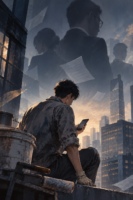
Facade
While I was waterproofing the rooftop, a message suddenly popped up on my phone from the finance department: [The 600-yuan high-temperature allowance for July and August has been credited. Please check your account] Less than three seconds later, the message was deleted. Another message appeared. [The 100-yuan high-temperature allowance for July and August has been credited. Please check your account within two days.] I glanced at the temperature display on the rooftop. Forty-two degrees. This month, after adding the high-temperature allowance and deducting the fines, my salary would be 59.8 yuan. I stared at the message for two seconds before putting my phone away and continuing to apply waterproof coating to the base of the wall. Six hundred yuan wasn’t much. But it would have meant my wife could spend fewer days running her street stall. Now it was down to 100 yuan, and there was still no sign of my daughter’s college tuition. -
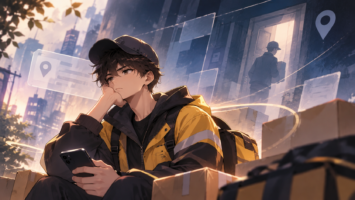
The Delivery Driver
My fingertip brushed across the notes on the delivery slip. A cold sweat instantly broke out along the back of my neck. It was that address again, and that same sentence again: “Don’t call. Just leave it at the door.” The 680 yuan compensation had come from climbing hundreds of stairs under the scorching sun. That day, I had followed her instructions and left the package outside her door. I took a photo and uploaded it according to procedure before turning to leave. Just as I was walking away, a man in a black baseball cap suddenly appeared. Without looking around, he picked up the package from her doorstep and hurried away. I hadn’t thought much of it at the time. I assumed he was a family member or someone she had asked to collect it. But less than half an hour later, the platform called. The customer had reported that her package was missing. I tried to explain that I had left it at her door exactly as instructed, but they didn’t even give me a chance to defend myself. In the end, I was held responsible and had to pay 680 yuan in compensation. Now, seeing the same address and the same note again, I hesitated for half a minute, phone in hand. There were four packages this time. I absolutely could not make the same mistake again. -
-

As an orphan, I was taken in by my cousin for three years
When I was eighteen, my hometown was struck by a devastating flood, leaving me an orphan. I arrived in the city with nothing but a suitcase and stood outside my cousin’s home. She had only been married for six months and was living in a cramped thirty-square-meter apartment, yet she pulled me inside and said, “This is your home.” I lived there for three years, until I found a job and was able to support myself. She never once mentioned the cost of having me there. During those years, she shielded me from every relative who urged me to get married early and bring a dowry into the family. Later, when I started my own cross-border e-commerce business and was on the verge of bankruptcy, she mortgaged the home she shared with her husband and gave me the last of the working capital I needed. Now, I’m worth hundreds of millions. Her son has been admitted to a prestigious university, but she is worried about his tuition and living expenses as an international student. In the end, she hesitantly asked if she could borrow 150,000 yuan. I pushed a shareholding document across the table toward her. “Sis, we’ve been keeping 25% of the company’s shares for you all these years. You’re one of the founders. This isn’t a loan—it’s your share of the dividends. Use them for your son’s tuition. Whatever is left can be saved for his wedding.” She looked at the date on the document—eighteen years ago—and burst into tears. That was the day I first moved into her home. -
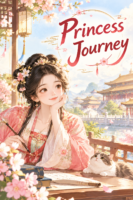
Princess Journey
The moment I was born, my father heard my innermost thoughts. [Oh, my father was actually a wise and mighty emperor, one of the greatest rulers in history!] Unfortunately, he had a few flaws. First, he acted on impulse and killed a meritorious official. Afterwards, he berated others for not advising him. [Later, he executed the Minister of the Court of Judicial Review, creating a shocking miscarriage of justice that would be remembered for centuries, only to shift the blame onto his ministers.] [He publicly praised the Grand Tutor as a wise minister who could reflect his own shortcomings, but after the man’s death, he desecrated his grave and even had his corpse whipped.] And what’s even more outrageous is that, despite clearly loving my mother so much, he insisted on making her give birth to one child after another. In the end, as he lay on his deathbed, he was embracing another beauty while reminiscing about my mother. What a scumbag! The emperor’s brow twitched in surprise. Finally, he couldn’t take it anymore. “Quickly, go and invite the master from Huguo Temple!” -
True Longevity
When a nation is on the verge of collapse, monstrous evils and chaos will inevitably arise, when a nation is on the verge of collapse, there will always be sages who rise to save the world… -

A Tragic Life
It wasn’t until after my death that I learned I was the male lead of the year’s top-selling angst-fest novel. -

Shackles
In the fifth year of the Mingcheng reign, a severe drought struck. The Marquis’s estate needed a respectable young woman to bear an heir; for five taels of silver, I sold myself.
0 Comments